





What to know
The province projects a $13.8B deficit for 2026–27, which Finance Minister Peter Bethlenfalvy says has to do with economic uncertainty.
The government is scrapping HST on new homes for one year, offering rebates up to $130,000, and investing $300 million to convert condos into long-term housing, including below-market units.
A $210 billion, 10-year infrastructure plan includes highways, transit and hospitals, alongside a new $4 billion investment fund and programs to support trade-impacted communities and emerging technologies.
Ontario plans $64 billion in health infrastructure, new hospital beds and expanded primary care access, though critics say hospital funding still falls short of system needs.
Post-secondary funding will increase, but OSAP cuts and tuition changes are coming, while small businesses will see a corporate tax cut and potential changes to holiday retail closures.
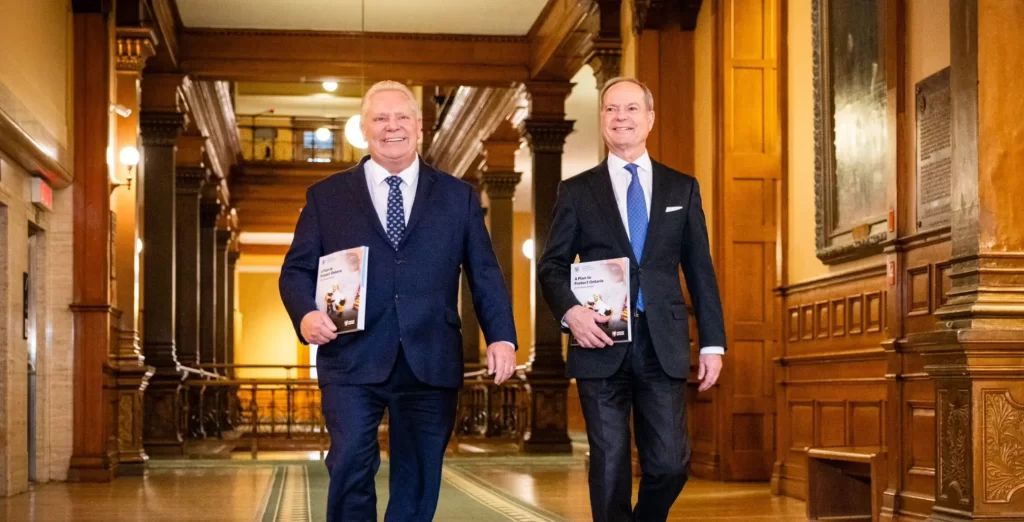
Ontario Premier Doug Ford’s government has just unveiled its 2026 budget plan, titled “A Plan to Protect Ontario,” which breaks down the province’s investments in housing, infrastructure, education, businesses, and healthcare for the year.
The $244.2-billion budget was unveiled on Thursday, outlining the measures the province says will “make Ontario the most competitive jurisdiction in the G7 and lower costs.”
The province anticipates a $13.8 billion deficit from the 2026-2027 period, which is almost double from what it was projected for this year in the previous budget.
Speaking with reporters on Thursday, Ontario Finance Minister Peter Bethlenfalvy attributed the larger-than-expected deficit to global economic uncertainty and challenges, citing tax cuts, COVID-19 disruptions, and population growth.
“Of course I’d prefer to have a smaller deficit, I’d prefer to balance sooner, but we have to live in the world we’re in. And we have now many challenges in front of us,” he said.
“We are delaying our path to balance by one year. I think it’s the quickest path to balance of any province in Canada, including the federal government. And as well, our deficit-to-GDP our economy is amongst the lowest in Canada. So, we’re being good fiscal managers but at the same time we’re investing in our public services and to put more money back in the pockets of families, individuals and businesses.”
Ontario’s 2026 budget includes a $1.1 billion tax cut for small businesses, delivering on our promise to build a more competitive provincial economy that can stand up to tariffs.As we cut taxes, we’re also investing record amounts in infrastructure, education and health care,… pic.twitter.com/m8M4uWAEOM— Doug Ford (@fordnation) March 27, 2026
Housing
Ford’s government is offering tax reliefs to help home seekers afford buying in the province. From April 1 to March 31, the province is removing the full 13 per cent Harmonized Sales Tax (HST) for all new homebuyers, with the support of the federal government.
Those buying a house valued up to $1.5 million could receive up to $130,000 in rebates, while the rebate value will proportionately decrease for those buying homes over that value, reaching a maximum of $24,000 for homes priced at $1.85 million and over.
The budget also includes a $300-million investment to its Building Ontario Fund, in partnership with private developer High Art Capital, that will support the conversion of 2,200 condo units into long-term housing in the Greater Toronto Area (GTA). According to the province, about 550 of these units will have their rents set at 25 per cent below the market value or lower than 30 per cent of the median household income.
In addition, the province says it’s working with federal and municipal governments to reduce development fees to boost up constructions and “make housing more affordable.”
Read More
Investments and infrastructure
Echoing last year’s plan, the 2026 provincial budget also highlighted measures to reduce economic uncertainty amid the U.S. tariffs, featuring strategies to diversify economic partnerships and make investments in infrastructure and support local businesses and workers.
As part of that objective, the province launched a $4-billion “Protect Ontario Account Investment Fund,” which will “advance Ontario’s long-term economic and strategic priorities” by making investments in new industries and technologies.
In addition, it is launching a $40-million “Trade-Impacted Communities Program,” which will offer economic support for “projects that promote economic resiliency, increase export and investment opportunities.” Municipalities, development organizations, and business accelerators and industry associations will be eligible to apply for the funding.
The province also announced a 10-year capital plan to support more than $210 billion in infrastructure investments. From 2026-27, investments from the plan will total $37 billion, which will be going towards building highways, transit, hospitals, and more.
“Providing an additional $300 million over six years through the Community Sport and Recreation Infrastructure Fund, to help meet the needs of growing communities by supporting the repair, upgrade or construction of new sport and recreation facilities across the province. Ontario’s investments through the program now total $500 million.”
Despite criticism from local residents and groups, Ford’s budget also supports an expansion of Toronto’s Billy Bishop Airport. The province says it will be bringing forward legislation to take control of the waterfront airport to support an expansion that will bring more jets to the site.
Read More
In addition, the budget includes a $107-million investment over three years starting in 2026 to support its “Critical Technologies Initiatives program,” which the province says will “help accelerate the development, commercialization and adoption of critical technologies in key sectors.” These include agriculture, manufacturing, mining, defence, automotive, and more.
This program will also support AI infrastructure and “help create opportunities for businesses and increase productivity.”
Healthcare
Over the next ten years, the province says it will invest about $64 billion into health infrastructure, including a plan to support 50 hospital projects and deliver 3,000 new beds to enhance healthcare access.
The province is allocating $1.1 billion for hospital funding this year, which it says is a four per cent increase from the projected funding, and aims to promote “high-quality care” and improved access to treatments.
However, earlier this year, the Ontario Hospital Association officials told media a $2.7-billion funding was necessary if the province were to support hospitals to meet full operating needs, which is over double the actual funding delivered in the budget.
As Ontario continues to face a shortage of family doctors, the province is expanding its Primary Care Action Plan to $3.4 billion between 2025 and 2029, aiming to connect “everyone in Ontario” with family doctors and primary care providers.
Read More
Education
The province has also established a new long-term funding plan for post-secondary institutions, which will bring $6.4 billion in funding to the industry over four years and increase its annual funding to $7 billion.
Despite intense pushback from students across the province, the budget also outlined that the province will be introducing updated tuition frameworks and introducing Ontario Student Assistance Program (OSAP) cuts, which it says are necessary to ensure long-term sustainability of the education system.
Read More
The budget also includes a three-year, $6 million investment for competitive scholarships for post-secondary students in the Queen Elizabeth Scholars program.
The budget also included an $750 annual Classroom Supplies Card for elementary school teachers to support elementary school teachers who pay out-of-pocket for arts and crafts, stationery, and toilet paper supplies for their classrooms. The initiative will take a $66 million annual investment from the province.
Read More
Businesses
As part of the province’s efforts to help businesses deal with global economic uncertainty, the budget also proposes a corporate income tax (CIT) cut from 3.2 per cent to 2.2 per cent for small businesses.
According to the province, the measure would come into effect July 1 if passed, providing additional $1.1 billion in relief over three years to over 375,000 small businesses.
The budget also mentions that the province is moving forward with a controversial proposal amendment that will remove a requirement for retail stores to close during Family Day and Victoria Day.
According to the province, the amendments would include removing authorities from municipalities in Ontario to maintain or pass any local by-laws to require closures during the two holidays.
Read More
