





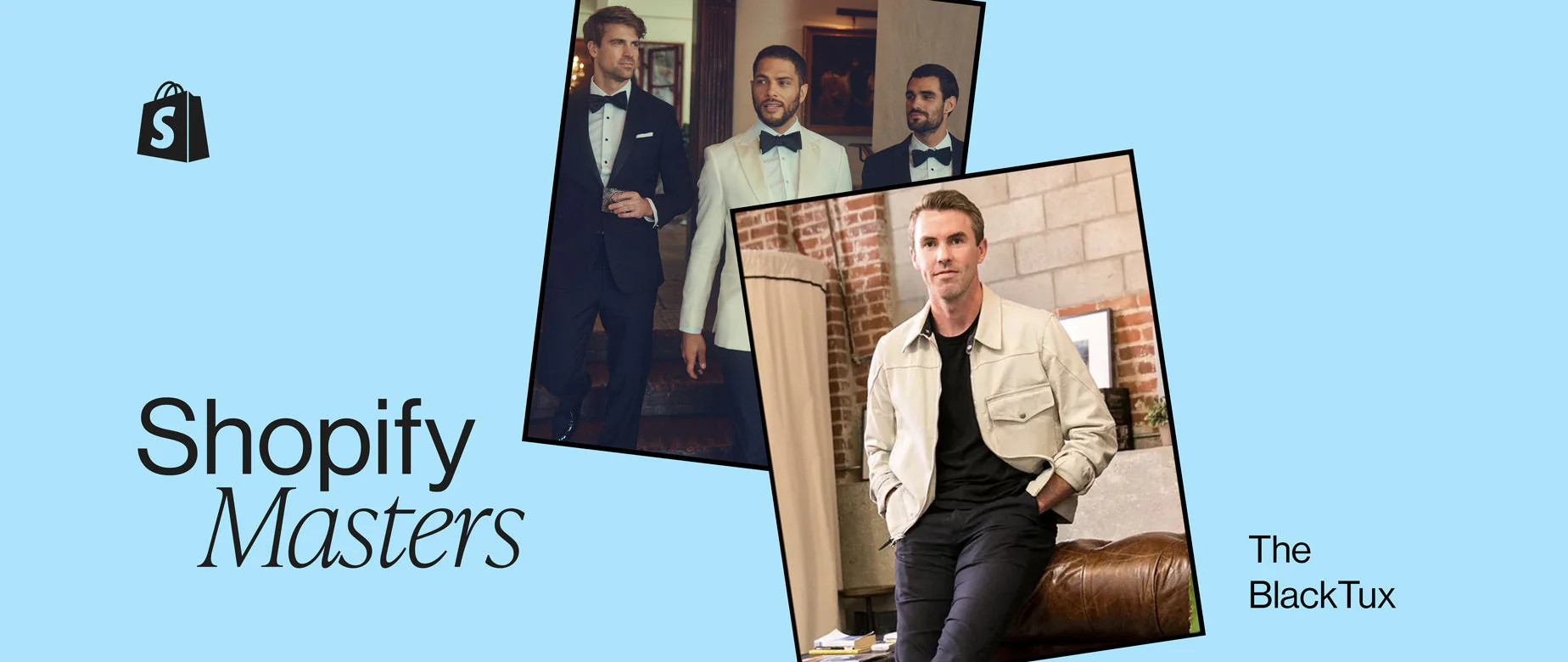
Andrew Blackmon and his cofounder, Patrick Coyne, pitched their tuxedo rental business to every investor they could get in front of in Silicon Valley. They all said no—the duo were too young; not enough experience. About nine months later, after writers from GQ and The Wall Street Journal tried the service for themselves and a waiting list swelled into the thousands, those same investors were finally interested.
Today, The Black Tux is a nine-figure business with seven flagship stores and showrooms in more than 40 Nordstrom locations, built by rebuilding formalwear rental from the garment up. Here, Andrew describes how he and Patrick proved demand before raising a dollar, why the real disruption was the tuxedo itself, and how they ran the whole company out of a Santa Monica garage.
On the strip-mall rental experience that made him want to start over:
I’d been in so many weddings and been to prom a bunch of times, and every time I showed up in a suit or tuxedo that was two sizes too big. It looked like something I’d pulled out of my dad’s closet—no offense to my dad.
That was the industry: Go to a strip mall, try something on from a guy who smells like he just smoked a cigarette, and you’re left standing at the altar or as a groomsman or at prom not looking your best. These are some of the most important days of your life. Your clothing should help you feel confident, not work against you. That was everything we wanted to change.

On why the real disruption was the garment, not the delivery:
Everyone focuses on the delivery method, and yes, that was part of it. Instead of walking into a shop, people submitted their sizes online—height, weight, body type, a bunch of questions—and we’d send the suit or tuxedo about two weeks before the event so they could make sure it fit and felt nice, then send it back after.
But the bigger disruption was in the clothing itself. Every rental tuxedo out there was made in the same places. They were all polyester. The shirts were microfiber. The shoes were literally plastic. So we reinvented the whole supply chain. The idea was a tuxedo that feels like something you’d buy for $1,200, not some cheap garment. The value prop was the ease of use, but also the physical garment itself.
On writing a 50-page business plan instead of a 10-slide deck:
We were a little different than most entrepreneurs. We didn’t have a 10-slide deck. We wrote a business plan that was 50 pages long. We were super methodical about it, which is funny in hindsight, but it was good for us to actually think through all the risk.
We’d raised a bit of friends-and-family money, Patrick and I put in whatever we could, and then we went to Silicon Valley and pitched anyone we could get connected to.

On getting rejected by every investor for being “too young”:
Everybody said no. It was, “This is an interesting business, but you guys are really young. You haven’t done anything.” And that was true. I’d barely even had a job before. So we got a bunch of no’s.
About nine months later, we decided, OK, we’re just going to launch anyway. Let’s do what we can with the capital we have.
On the GQ write-up that became the turning point:
We got lucky, but we also hustled our way there. A bunch of influential people who wrote for GQ and The Wall Street Journal used our service, they loved it, and they wrote about it.
That mattered because GQ would never tell anyone to rent a tuxedo. They’d basically tell you to avoid the industry altogether—it had a stigma on it. So getting a stamp of approval from them that early was huge. And it wasn’t for nothing. They came and saw the garments we were making. It was methodical; they wanted to be sure they were recommending something genuinely valuable to their readers. It’s not overnight success, but in an industry where you have to trust whomever you’re renting from, that stamp of approval was really valuable.
On using a website waiting list to prove demand they couldn’t yet fill:
After GQ, did we have enough product? Not even close. We were still figuring out how to operate the whole thing, because a rental isn’t just handing someone a garment. It comes back, and sometimes it needs repairs—we had cobblers, we had dry cleaning, it’s a whole process. And we didn’t have the capital to buy that many tuxedos. It was only tuxedos back then.
So we put a waiting list on the site. Basically, “Do you want this but can’t get it right now?” We collected email addresses, and if we got more inventory, we’d let people know. I don’t remember the exact number, but it was thousands. That gave us a way to say, look, a lot of people want this concept—we just need to figure out how to get it to them.
Then we went back to all the investors who’d liked us the first time and told them we had the demand and needed capital to finance the supply side. A lot of them said, Yeah, we’re in now. It went from a moment where we wanted to cry to a really gratifying one about six months later.

On running the whole company out of a garage:
We ran the entire business out of this little place in Santa Monica that was basically an old garage. Patrick and I mostly brought vision and tenacity—the willingness to push through whenever a problem came up. He brought a ton of value on sourcing; he’d go to different countries like a bull in a china shop, trying to figure out how we were going to make this stuff.
I was doing a lot on the brand side, and I was also answering phones under a customer service alias. We were both cobbling shoes. We did everything we possibly could to make it work. I hired a bunch of my friends—guys who surf and didn’t really have jobs at the time—and they’d come pack boxes, fix shoes, fix garments, all this weird stuff.
You have to prove people want the service, and want it from you, before you can get the capital to stair-step your way up. But I have great memories of those days.
On letting the customer experience drive marketing before spending a dollar:
For the first couple of years, we barely spent anything on marketing. Our view was, let the customer experience drive the marketing. We’re lucky to be in an industry where you’re wearing this thing to a friend’s wedding, and people are constantly asking about the attire. So it really did spread without us spending a lot of money.
We put some money into PR, and honestly those were the days when you could get a lot more value out of a PR firm. But once we wanted to grow faster, we moved into the normal channels. You just have to be smart about intent—where does someone actually need a suit or a tuxedo? You can’t just blast your name out there. That’s not the most effective way to do it.
Hear Andrew’s full conversation on Shopify Masters for more on the cease-and-desist that became a Nordstrom partnership, the year he handed 10,000 customers his personal cell number, and how therapy made him a sharper CEO.
