





A 1924 photo showing Grand Master W. T. Woods and other Masons in the building’s grand ballroom.
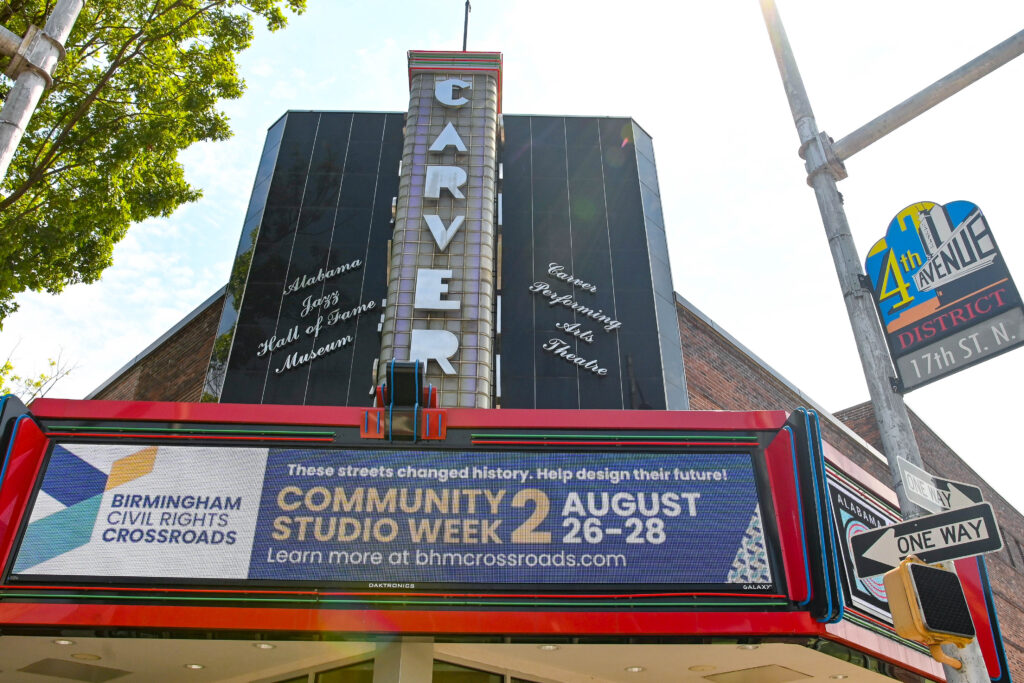
The Businessman Who Built an EmpireFew people are more closely tied to the success of Birmingham’s Black business district than A.G. Gaston. What started in 1923 as an insurance company grew into a diverse and robust business empire. At one point, he even purchased the former Penny Savings Bank headquarters on 18th Street to house his own business ventures. One address, three generations of Black-owned institutions.His impact is why The A.G. Gaston Building on 4th Avenue has become a symbol of what Black entrepreneurship in Birmingham could achieve.Gaston would go on to build the A.G. Gaston Motel, which later served as headquarters for Dr. Martin Luther King Jr. and the Southern Christian Leadership Conference during the 1963 Birmingham Campaign. Black business success and the fight for civil rights were never separate stories in this city. Gaston wasn’t alone. Up and down 4th Avenue, Black entrepreneurs, architects, and builders created a business district that thrived and stood on its own.A Legacy Worth HonoringThe success of the Civil Rights Movement and integration created unexpected economic challenges for Black-owned businesses. As legal barriers fell, Black customers had more options and Black-owned shops had trouble offering the selection and discounts of the larger white-owned stores.Then, in the 1960s and ’70s, Interstate 65 cut straight through Birmingham’s Smithfield and Graymont neighborhoods. The road separated them from downtown and severed the routes that had connected the downtown businesses to the very neighborhoods that supported them.While 4th Avenue hasn’t fully recovered the density and vibrancy of its heyday, you can still feel its hum. Businesses like Green Acres Café and the Carver Theatre still serve the community, a living link between the district’s past and its present. The Prince Hall Grand Lodge still stands. So does the story.Investing in 4th Avenue’s Next Generation
Walk the Path. Honor the Past. On 4th Avenue, that means celebrating those who built a business district out of sheer will, and investing in the ones who will build what comes next.
Learn More
The Birmingham Civil Rights Crossroads project is a $21.6 million federal RAISE grant investment creating 3.16 miles of Complete Streets connecting Smithfield, Graymont, and the Civil Rights District to downtown Birmingham. Sign up for project updates to stay connected as design moves toward the 2026 demonstration project and 2027–2029 construction.
Stay Connected
Research Links:
