





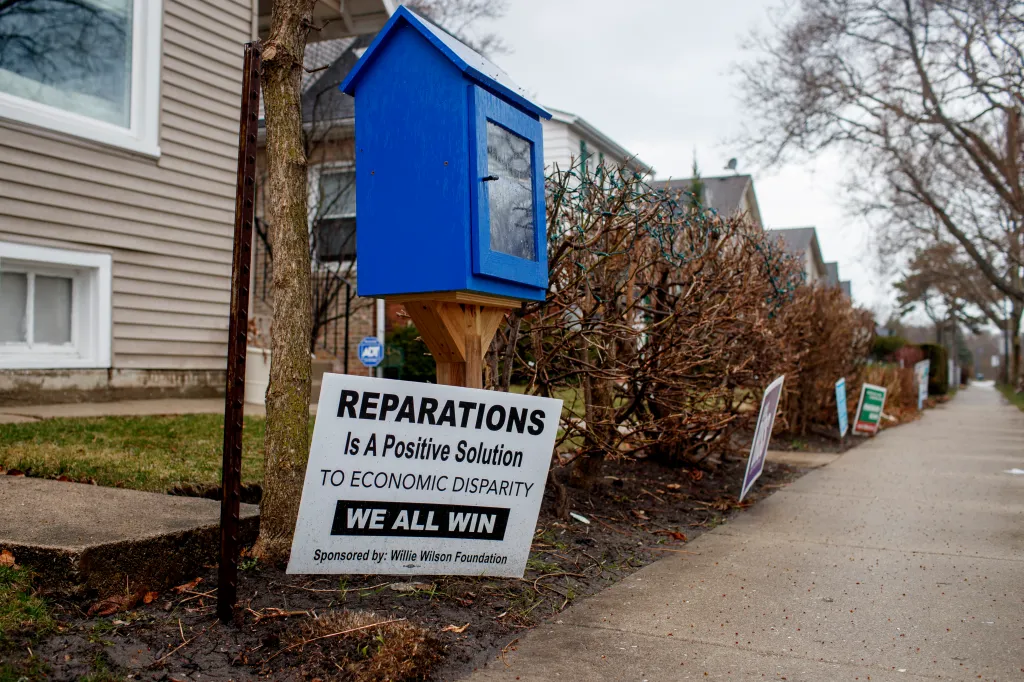
In a partnership with Oakton Community College, Evanston’s Reparations Committee’s economic working group is launching a hybrid grant and training program for Black residents looking to grow their businesses as a pathway for economic mobility.
The Kickstarter Program will feature a six to eight week cohort of customized training for participating entrepreneurs based on their individual business needs.
The opportunity will also provide a tiered grant program with three levels of funding for business owners:
• Tier one: Up to $500 for concept or skill development for existing business owners or new entrepreneurs
• Tier two: Up to $2,000 for launch support for businesses in a year or less of operation
• Tier three: Up to $3,000 for capacity support for businesses with a clear growth plan and documented revenue earnings
“One of the things we are most hopeful in achieving is not only creating businesses that will begin, but also businesses that are sustainable and really just meeting people where they are in their level of entrepreneurship,” said Maurae Gilbert McCants, the director of the Small Business Development Center at Oakton College, at a Reparations Committee meeting in February.
“This [program] is really helping [business owners] to be competitive and to also be able to better understand some of the things it takes to make a successful business,” McCants said. “I’m ready to do the work.”
Funding for the initiative stems from a $20,000 reserve administered by the Reparations Stakeholder Authority of Evanston, an offshoot of the Evanston Community Foundation (ECF).
The foundation works to provide targeted financial support for entrepreneurs who demonstrate engagement and alignment with the Small Business Development Center at Oakton Community College.
Evanston has affirmed its commitment to advancing economic opportunity for Black residents since the Reparations Committee was codified in November 2020.
“We really wanted to work hard to leverage the resources that we had access to in a way to support a wide variety of businesses in our community,” said Tracy Fulce, president of Evanston Public Library and a member of the working group responsible for the program.
“Leveraging the expertise of the Small Business Development Center and its coaches to work with entrepreneurs, and then being able to provide them resources to support their work, was really a no-brainer,” Fulce said.
Access to the program will be based on eligibility.
Qualifying residents must be entrepreneurs who live in Evanston who have not yet received funding from any other city-sponsored economic development program.
Applicants must also complete a Small Business Development Center onboarding and advising session and demonstrate a business concept with clear future milestones.
Interested parties will need to complete the committee’s interest form and will be contacted by the Small Business Development Center for an initial meeting.
Funded participants will then receive up to 90 days of structured training and support, guided by an assigned advisor and tracked through ongoing progress notes, according to a memorandum provided by Evanston’s Economic Development Specialist Neal Reeves.
Application reviews began on March 25, but will continue until the program’s start date on April 27.
