





Eleven years ago, the Federal Reserve Bank of Boston published one of the most startling economic statistics associated with this city. In The Color of Wealth in Boston, the median net worth of U.S.-born Black households in Greater Boston was $8. For white households, it was $247,500.
This August, the Boston Fed gave us another warning. Its 2025 Massachusetts Economic Conditions and Household Opportunity Survey estimated median family net wealth at $549,200 for white families, $7,800 for Black families and $1,200 for Hispanic families. The two studies cover different populations and cannot be directly compared, but no one can conclude from those figures that the underlying problem has been solved.
What may be most disturbing is that the report received news coverage and responses from economic-justice organizations, but nothing resembling the sustained civic alarm these figures deserve. No public five- or ten-year target. No annual racial-wealth scorecard. No institution or leader publicly responsible for results. We risk treating one of Massachusetts’ largest economic disparities as background noise.
Some in Black Boston remember Councilor Chuck Turner, Sen. Dianne Wilkerson and State Rep. Mel King. Turner helped drive Boston’s resident-jobs policy. Wilkerson pressed institutions on minority banking, businesses and access to opportunity. King made community control and economic development central to his work.
They could get in the faces of decision-makers and make clear that exclusion carried a political price. That pressure sometimes produced results, but it did not permanently change procurement systems, lending practices, development networks or institutional incentives. Decisions changed faster than systems did. That is one reason a much smaller group is refighting battles that should have been settled decades ago.
Massachusetts and Boston have enhanced supplier-diversity programs, homeownership initiatives, entrepreneurship programs and commitments from banks, foundations and universities. But programs are not the same as a comprehensive strategy with numerical goals, timetables, assigned responsibility and public accountability.
Greg King of TSK Energy Solutions has put his finger on part of the problem. Executive Order 599 directs state agencies to promote supplier diversity, but King argues that participation means little unless it changes the competitive structure.
Supplier diversity is not uniformly scored in every procurement. Winning bidders’ diversity promises are not always converted into enforceable contract obligations. The public cannot consistently compare promises with what certified firms were actually paid, nor does the system consistently measure whether diverse subcontractors become prime contractors or participating firms grow.
The Seaport provides the clearest Boston example. By 2017, more than $18 billion in public investment had helped transform the district. At the time, Black developer and restaurateur Darryl Settles said: “I don’t know one person of color that has made any money from the development of the Seaport. Not one.”
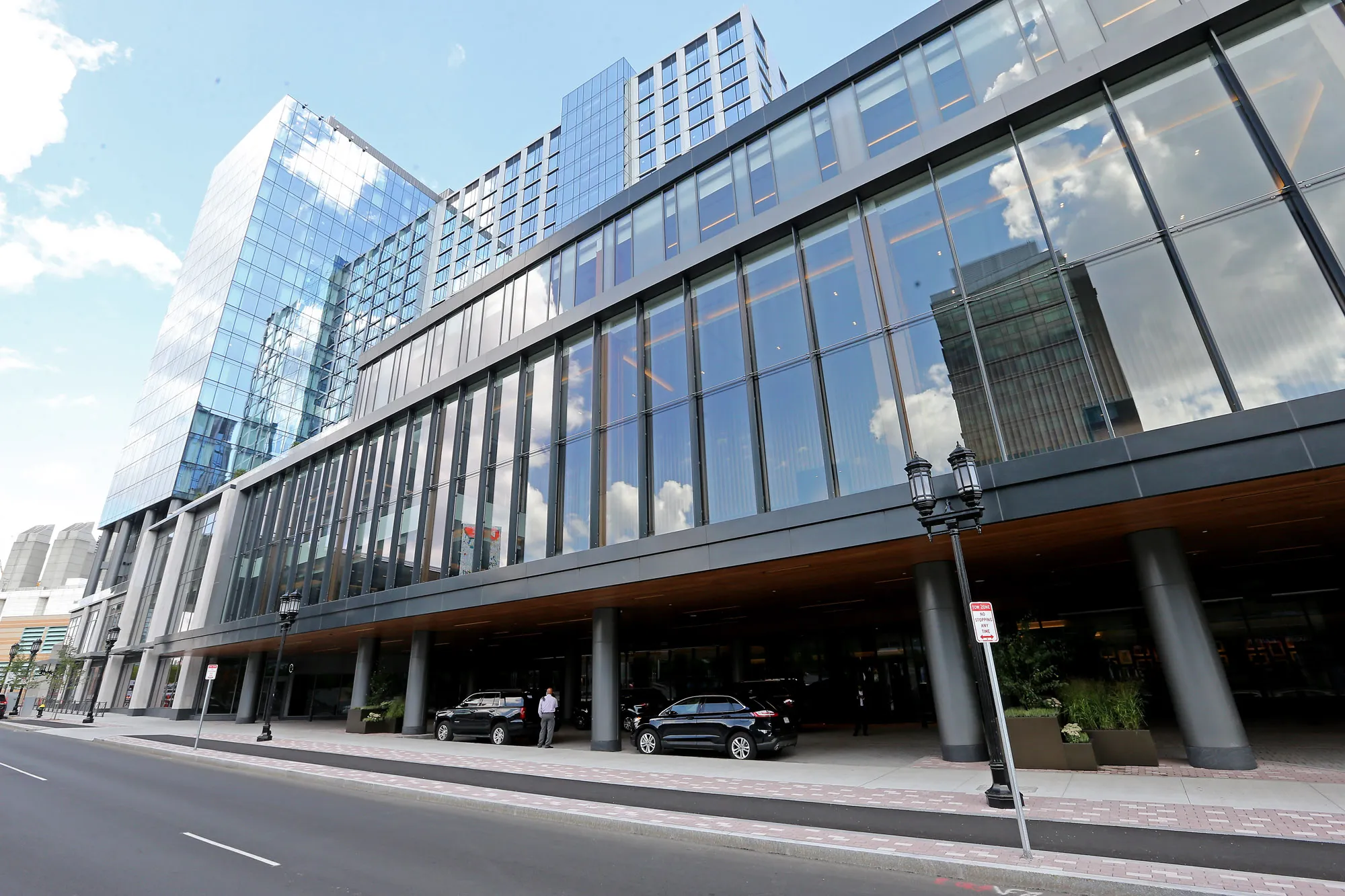
Then Massport changed the rules. Diversity became 25% of the evaluation criteria for the project that became the Omni Boston Hotel. The winning team included Black co-developer Richard Taylor, minority-owned firms and $7 million in equity from minority investors.
The Omni does not disprove Settles’ warning. It helps prove his point. The market did not suddenly discover Black developers and investors. The rules changed, and the outcome changed.
That lesson matters because another extraordinary wave of investment is underway. White Stadium represents more than $325 million in public and private construction. Madison Park Technical Vocational High School is estimated at roughly $680 million to $720 million. The Blue Hill Avenue center-running bus lane project is $163 million. Franklin Park has $28 million in dedicated investment. Nubian Square projects include approximately $160.7 million at 135 Dudley St., $20.4 million at 40-50 Warren St. and $10.8 million at 75-81 Dudley St. That brings the pipeline to more than $1.388 billion at the low end and more than $1.428 billion at the high end, before other housing and infrastructure projects are counted.
The World Cup and Tall Ships brought crowds, spending and headlines about an economic boom. Preliminary city data estimated roughly $83 million in Boston spending during the second half of June, while bars, restaurants, hotels and short-term rentals reported substantial gains.
But here is the racial-wealth question: How much went to Black-owned businesses?
Before the World Cup, African immigrant business owners reported difficulty obtaining grants and securing vendor opportunities. The city’s subsequent survey showed many hospitality businesses gaining customers and revenue, but the publicly reported results did not tell us how Black-owned businesses performed.
Tall Ships did better in one important respect. Boston Harbor Bites brought together more than 40 local vendors, with organizers reporting that 65% were minority- or women-owned. That is the kind of intentional intervention we should learn from.
Economic impact is not the same thing as wealth creation.
The question for this nearly $1.4 billion pipeline of neighborhood development should extend beyond how many Black vendors receive contracts. How many subcontractors become prime contractors? How many firms gain bonding capacity and working capital? How many entrepreneurs acquire equity? How many businesses buy the real estate they occupy?
We do not need another decade of studies telling us the same thing. Mayor Michelle Wu, Gov. Maura Healey and the region’s business, philanthropic, banking, university, hospital and Black business leadership should establish a measurable racial wealth strategy. Set targets for homeownership, business growth, capital, contracting and asset ownership. Publish an annual scorecard. Assign responsibility for results.
Boston will continue creating enormous wealth. The question is whether we will keep counting how much money moves through the economy — or finally measure who gets to build the wealth, own it and keep it.
Ed Gaskin is Executive Director of Greater Grove Hall Main Streets and founder of Sunday Celebrations
