





As South Africa grapples with high unemployment and growing pressure on young people and small businesses, the Kgodiso Development Fund (KDF) is positioning black farmers, agricultural entrepreneurs and SMEs as key drivers of inclusive economic growth, food security and job creation.
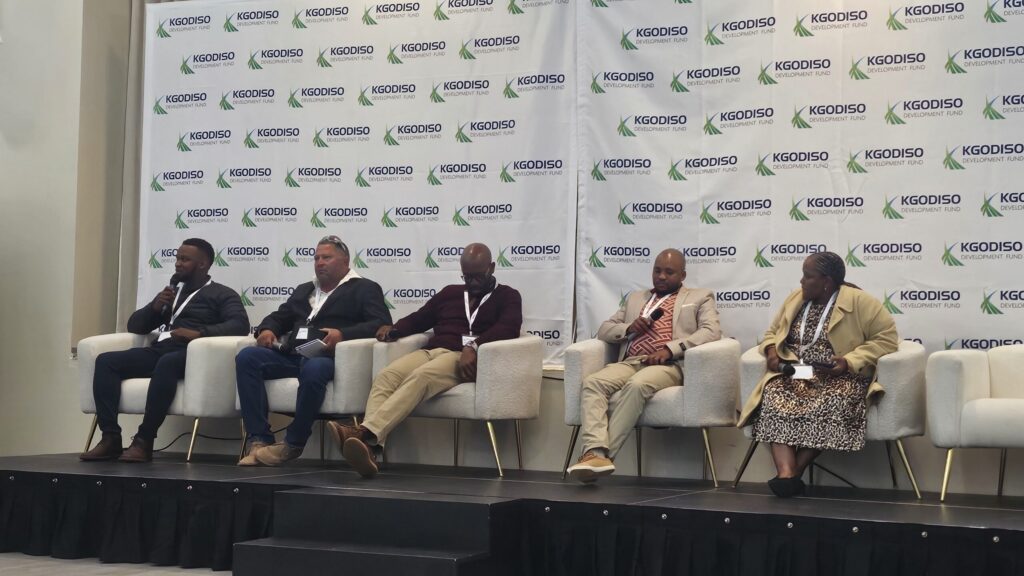
At a stakeholder event on Monday, 25 May, in Johannesburg, the fund reflected on its impact in strengthening black-owned agricultural enterprises and advancing a more inclusive food system, bringing together government, industry partners and beneficiaries.
The KDF chairman, Setlakalane Molepo, said agriculture’s future will depend on building a new generation of skilled, technically capable farmers and agribusiness leaders.
“Agriculture today is no longer merely about land and labour. It is increasingly about science, data, climate resilience, technology, mechanisation, supply chain integration, research and development,” Molepo said.
He stressed that farmers of the future will require advanced technical and managerial skills, while warning that climate shocks, limited infrastructure and restricted access to finance continue to challenge emerging farmers.
“Climate shocks continue to threaten agricultural production. Emerging farmers still struggle with access to finance, markets and infrastructure,” he said.
Despite these challenges, he said KDF remains optimistic because of the resilience shown by farmers, entrepreneurs and communities working to build stronger agricultural enterprises.
Related stories
Four years of funding and farmer support
The KDF executive director, Diale Tilo, described the event as “a celebration of four years of measurable impact”.
According to Tilo, KDF funded 96 farmers and enterprises during the reporting period, including 50 participants from its scaling programme in the Northern Cape. During the year under review, the fund assessed a financing pipeline exceeding R144 million and approved loans worth R92 million. Since its establishment, KDF has deployed more than R240 million in loan funding and leveraged over R90 million in co-funding.
“These are not merely statistics. Behind every number is a farmer securing seed for the next planting season, a family business purchasing machinery, a young entrepreneur entering agro-processing, and a rural household regaining hope.” Tilo said.
He said KDF’s approach extends beyond finance to include mentorship, technical assistance and governance support. “Finance without support can become debt. Finance combined with mentorship becomes transformation.”
Support structure
Tilo also highlighted the importance of moving agriculture beyond primary production into value addition and agri-processing.
“The future lies not merely in growing crops, but in building new value chains. Not merely in exporting raw commodities, but in processing, manufacturing, packaging, branding and retail. Economic transformation without women is not transformative,” said Tilo.
The chief director of transformation and competition at the department of trade, industry and competition (DTIC), Takalani Tambani, said the department would continue to dismantle economic barriers and foster inclusive growth in South Africa.
“Initiatives like the Transformation Fund, aimed at aggregating enterprise and development funds for small and black-owned enterprises, and the Black Industrialists Programme are key in supporting access by black-owned and controlled enterprises to the mainstream of the economy,” he said.
Farmers share challenges and lessons
Gauteng farmer Nolunde Msamange shared how limited access to capital constrained her early days in farming.
“The only challenge I had was capital for fertiliser and inputs. Getting funding allowed me to plant the whole farm and access better implements.”
North West-based farmer Botlhale Tshabalala highlighted the struggle many young producers face when seeking finance. “I knocked on many doors, but they were locked. Without enough capital, farming becomes extremely difficult.”
Northern Cape raisins farmer Earle Loxton highlighted structural obstacles that continue to limit expansion for black farmers, including access to title deeds, water rights and financing terms better suited to agriculture’s long production cycles.
“If repayment terms were longer, and if blended funding models brought in additional stakeholders, more farmers would be able to participate and expand,” he said.
Meanwhile, Eastern Cape commercial farmer Mzimasi Jalisa encouraged aspiring agricultural entrepreneurs to start where they can. “Funding is very difficult, but the crucial thing is to start with your own money, grants or whatever resources you can access and grow from there.”
READ NEXT: Eggsellent growth: How Lebo Mashigo built a poultry empire
