





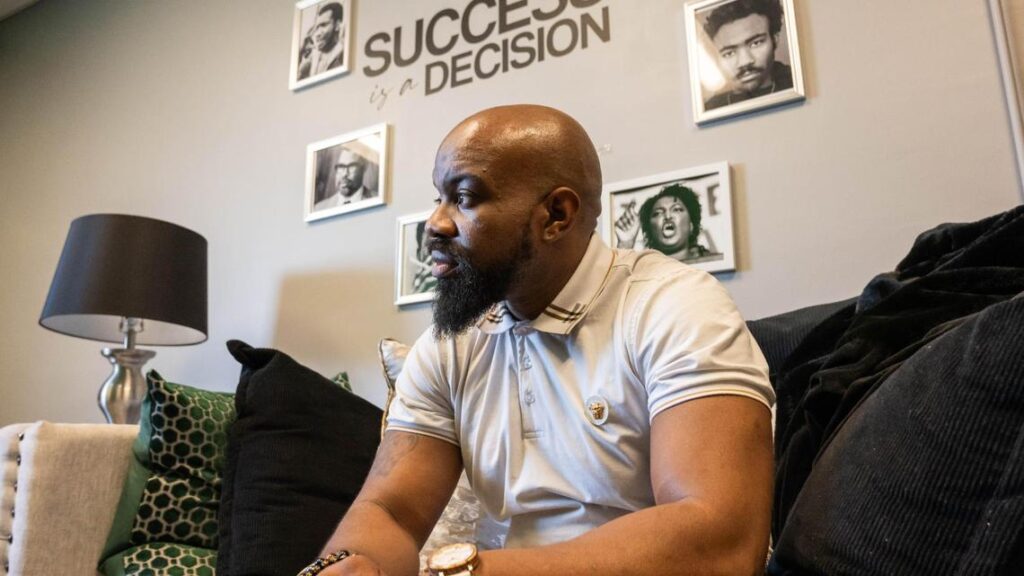
Kansas City G.I.F.T. has distributed more than $2 million to Black-owned businesses across the metro, a milestone the organization frames as both economic investment and a strategy to close the racial wealth gap.Since launching in 2020, the nonprofit has awarded 86 businesses, contributing to the creation of 151 jobs and average revenue growth of more than 200%, according to the organization. That total was reached following a March 28 pitch competition, where $60,000 in total was awarded to three businesses.For Brandon Calloway, CEO and co-founder of Kansas City G.I.F.T., the dollar amount is only part of the story.“This milestone is about far more than a number,” Calloway said. “It represents what is possible when we choose to invest in Black businesses with intention, and consistency.”The organization distributes funding through a combination of quarterly grants and an annual public pitch competition. Most applicants move through a private process, where proposals are reviewed and selected by a board. The pitch competition mirrors that process but places it in a public setting, where entrepreneurs present their businesses to guest judges and a live audience. Winners are awarded prizes ranging from $30,000, $20,000 and $10,000.Beyond direct funding, Calloway said the organization has built a system of support designed to sustain growth after the initial investment. That includes business coaching, accounting and marketing services offered at no cost to recipients.The results, he said, are measured across several indicators.“How many of those businesses are still in existence, how many new jobs have been created, and then what has been the growth of those businesses,” Calloway said. “Job creation, revenue growth and still being in business give us a good indication that we’re moving in the right direction.”Out of the 86 businesses that have received grants, 13 have closed, a rate Calloway said compares favorably to traditional venture capital outcomes.“We actually have a higher success rate than a typical VC,” he said.For some businesses, the funding has supported expansion into new markets or concepts. Calloway pointed to District Biskuits as one example.“They were doing strictly breakfast and were moving into lunch,” he said. “They pitched to expand their production so they could stay open longer and add lunch items to the menu.”He said that expansion later extended further. District Biskuits, 504 Armour Road, in North Kansas City. The restaurant, which opened in 2022, specializes in biscuit sandwiches. Tammy Ljungblad Tljungblad@kcstar.com For District Biskuits owner Guroux Khalifah, the biggest impact of the grant came at a different stage of the business.By the time he entered the pitch competition two years ago, the company had already moved through several phases, beginning as a pop-up in 2017 and later operating out of the Adam’s Mark Hotel before reopening at 504 Armour Road in North Kansas City.“At this time, we had already been open in North Kansas City for about two years,” Khalifah said. “We had pretty solid revenue projections and current sales.”He said the business had been growing year over year by 10% or more before receiving funding.That context shaped how the $10,000 award was used.“We were able to bring on two new employees, and we put some of that funding toward a quarter of the year’s marketing budget,” Khalifah said.At the time, the business had eight employees, not including himself. The additional hires expanded staffing capacity, while marketing helped introduce the brand to new customers.“A lot more people that didn’t know about us found out about us,” he said.Khalifah said the grant did not address a financial gap, but rather supported operational needs tied to growth.The funding was put into use within about a month, following a review of the business’s financials through the G.I.F.T. network. From there, the changes were incremental rather than immediate.“We were doing pretty well,” Khalifah said. “They just kind of added a little bit more gasoline to the fire.”Calloway said that outcome aligns with how the organization evaluates success.“When a business is really committed to figuring out solutions and really open to taking advantage of the support services, the more favorable their outcomes are,” he said.For Khalifah, the impact extended beyond operations. The experience of presenting his business publicly marked a shift in how he approached telling his story.His pitch traced the origins of District Biscuit, including learning to cook from his mother and the decision to leave his job and commit fully to building the business.“When I came back, I had clarity,” Khalifah said. “I said, you know what, I’m going to go all in.”He believes the recognition reinforced his approach to building the company.“It let me know that we were doing something right,” Khalifah said. “I could do my part in helping change the landscape of what it looks like to be a solid and profitable Black-owned business.As Kansas City G.I.F.T. continues to expand its reach, Calloway said the organization’s role remains focused on supporting that kind of growth, while placing responsibility for outcomes with the business owners themselves.“The businesses are really the ones actually doing the work,” he said. “They are growing their revenue. They are the ones creating jobs.”For Khalifah, the path forward remains tied to steady growth. District Biscuit continues to operate in North Kansas City while developing its sister concept, Howlin’ Fowl, which he said has been in progress for more than a year.The business plans to continue building on its current trajectory, shaped by a combination of internal execution and external support. He encourages other Black-owned businesses who may be considering the pitch competition but apprehensive to take a chance.“Just do it,” Khalifah said, “you never know who is listening.”
Related Stories from Kansas City Star
The Kansas City Star
J.M. Banks is The Star’s culture and identity reporter. He grew up in the Kansas City area and has worked in various community-based media outlets such as The Pitch KC and Urban Alchemy Podcast.
