





Access to capital and a fragmented landscape of support remain the biggest barriers to successfully scaling businesses.
A new, year-long study of Black entrepreneurship in Connecticut concludes that businesses struggle to access financing and have difficulty navigating a disjointed support system.
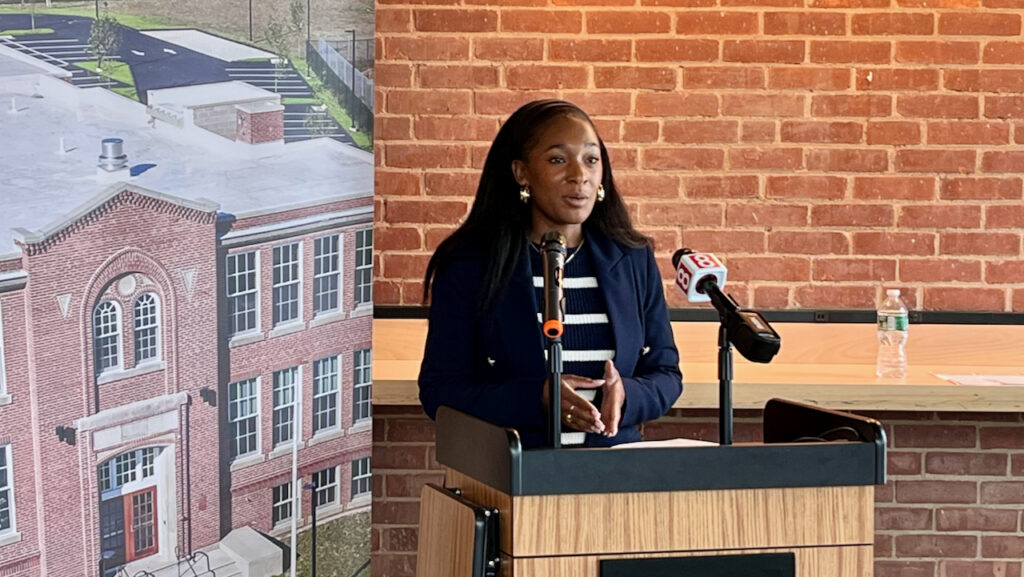
“Access to capital remains the greatest barrier,” said Jahkeeva Morgan, who heads up business incubation and entrepreneurship at ConnCORP, a New Haven-based nonprofit focused on economic development and entrepreneurship in underserved communities that carried out the study.
The initiative, which was first launched in February 2025, draws on data from around 300 businesses across the state.
Those surveyed said they have low confidence in lending institutions. Many cited difficulty meeting documentation requirements, fear of loan rejection, and a belief that lending systems are not designed to serve Black-owned businesses.
Nationally, Black entrepreneurs are nearly three times as likely to be denied financing than their white counterparts, and the study says that’s mirrored in Connecticut.
Black businesses are more likely to rely on personal savings or informal capital to sustain their enterprises.
Nationally, approximately 95% of Black-owned concerns are microbusinesses with fewer than 10 employees, which the report says reflects persistent inequities in access to capital, credit and early-stage investment needed to scale.
“Black entrepreneurship is one of the most powerful pathways to wealth generation, job creation, and long-term community stability,” the report says, noting that Black-owned businesses often anchor neighborhoods and create opportunities in disinvested communities.
Entrepreneurs reported difficulty navigating the volume and fragmentation of business information available to them, the report found. Many expressed uncertainty about which resources align with their stage of growth, how to evaluate their own readiness, and how to distinguish credible opportunities.
“There is no way that we can effectively and efficiently build systems for folks if we’re not hearing what they need,” Morgan said.
Aaron Rogers, co-founder of The Breed Entertainment, which hosts the annual Black Wall Street Festival in New Haven, took part in the survey. He hopes the data will spark structural change.
“I think what ConnCORP has created is a way for us to hold organizations and systems accountable to make sure we have what we deserve,” he said.

Entrepreneurs reported that municipal and state support feels inconsistent, with limited outreach and transparency, and also said they had difficulty accessing public contracting opportunities.
“This is not a skills gap, it’s a systemic gap,” said Samantha Williams, the founder of CMWP Foundation, an entrepreneurial support organization. “Supplier diversity and creative procurement opportunities should be another pathway to revenue for Black businesses.”
The report outlines a number of recommendations, including developing a statewide resource hub, creating a business readiness rubric, and establishing Black business councils within chambers of commerce.
It also advocates for financial institutions to introduce microloan and flexible credit products with lower documentation thresholds, hold regular “funding clinics,” and assign relationship managers to underserved entrepreneurs.
Anne Marie Knight, director of the Black Business Alliance, based in Milford, described the findings as urgent.
“The systems surrounding Black businesses are fragmented, underaligned and difficult to navigate,” she said. “The moment for conversation is past.”
