





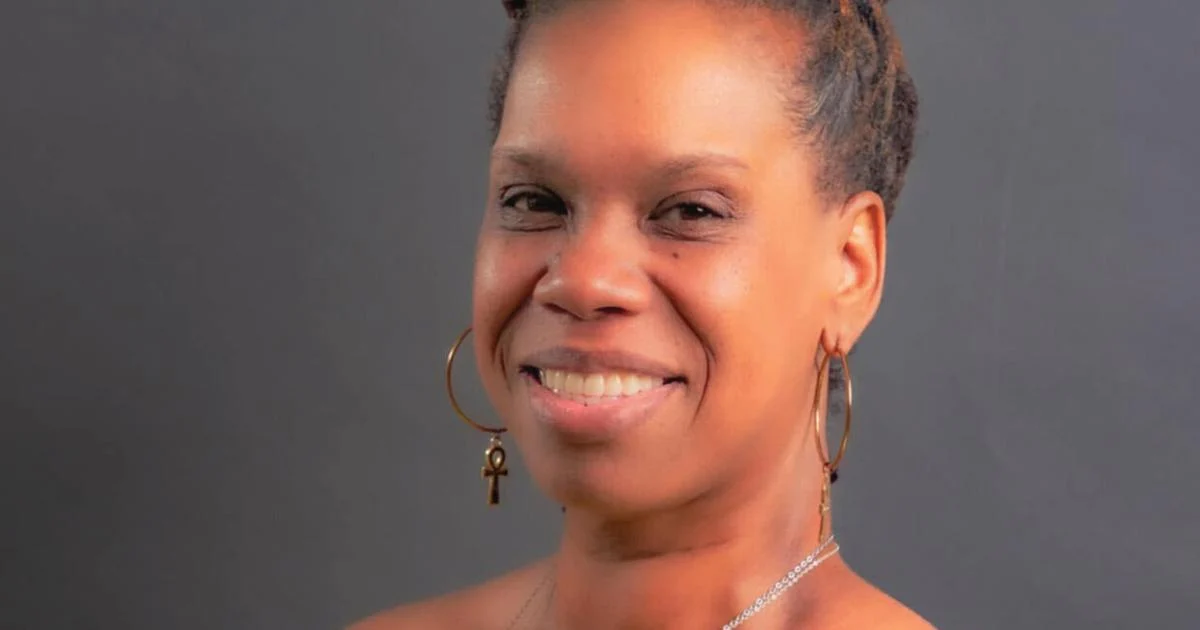
Shantelle Patton, founder of That Brown Bag
Photo courtesy of Shantelle Patton
In a world with limited resources, how do we encourage people in our communities to actively participate in creating sustainable economic growth? Especially when a gap in resources means everybody can’t adopt a bootstraps mentality of “work hard, earn more.” When faced with that gap, how do we build wealth and strong communities? Shantelle Patton, founder of That Brown Bag—a directory of Black-owned businesses in Buffalo, Niagara Falls, Syracuse, Albany, Rochester, and Toronto—spends her days trying to figure that out. Patton was inspired to create the directory after she saw a Facebook post naming a need for just such a list. “I took it as a personal challenge,” she says. “My next post was a call-to-action to tag all the Black-owned businesses. That is how That Brown Bag started.” Now, Patton is taking the platform national.The impulse was not random. As Intersect Buffalo’s Director of Programming and Community Engagement, Patton and business partner Kyria Stephens seek to empower entrepreneurs to boost economic growth in Buffalo’s Delevan-Grider area. Her work focuses on teaching entrepreneurs to build capacity, increase knowledge, and get their Minority and Women-owned Business Enterprise certification, an official credential that verifies a for-profit business as majority owned, controlled, and actively operated by one or more minority group members or women.That will happen, she says, “through economic empowerment, health equity, education, and engagement. That looks like teaching people to have better relationships with money. At the very root, it’s financial literacy and being able to teach people how to make money work to their advantage.”In teaching people to be good stewards of the money they make, Patton recalls an exercise from a former program where she was asked to write an open, raw, and vulnerable letter to money. “The opening line of the letter for me was, ‘This is the most toxic relationship that I’ve ever been in,’” she says. “‘You show up, I spend you, you go away, and now I am sad you’re gone. We’ve got a date on Friday, and then I’m lonely on Monday.’ That’s how I feel about money.”
Photo courtesy of Shantelle Patton
Patton highlights the scarcity mindset, the toxic relationship people have with money, and the importance of healing financial trauma. She believes by healing financial trauma in her community, things will start to look up. The process is “taking people through the entrepreneurial mindset: well-being, self-care, even down to making sure people get their health screenings and are taking care of their mental health,” she says. “Those are things that a lot of times get brushed under the rug in our community, so I’m putting a highlight on them.”Patton describes herself as a “boots on the ground activist. Your feet hurt, yet you keep walking.” Her ultimate goal is for her community to evolve from surviving to thriving. “[People] say, ‘pull yourselves up by the bootstraps.’ Oh, the boots that no one gave me? So how do we get these boots? We empower the individual with knowledge.”As Patton puts it, people don’t want to talk about financial literacy and budgeting when they’re struggling to pay for their next meal or the phone bill. “Once we address the underlying systemic issues, the community can move into increasing their economic footprint,” she says. Progress is impeded by lack of resources and ego, according to Patton. If resources were unlimited, she’d first “look at all the programming in the City, youth programming, housing programming, all of the social determinants of care. Those are all the things that get in people’s way of taking care of themselves.” And if ego were checked at the door, Patton believes it would be easier to prioritize betterment of the community because nobody would be worrying about who gets credit. “I don’t drop seeds with the expectation that I am going to see the harvest,” she says. “I drop seeds with the expectation that somebody else is going to come up behind me and water the seed that I dropped.”Learn more about That Brown Bag at brownbagexchange.com.
